





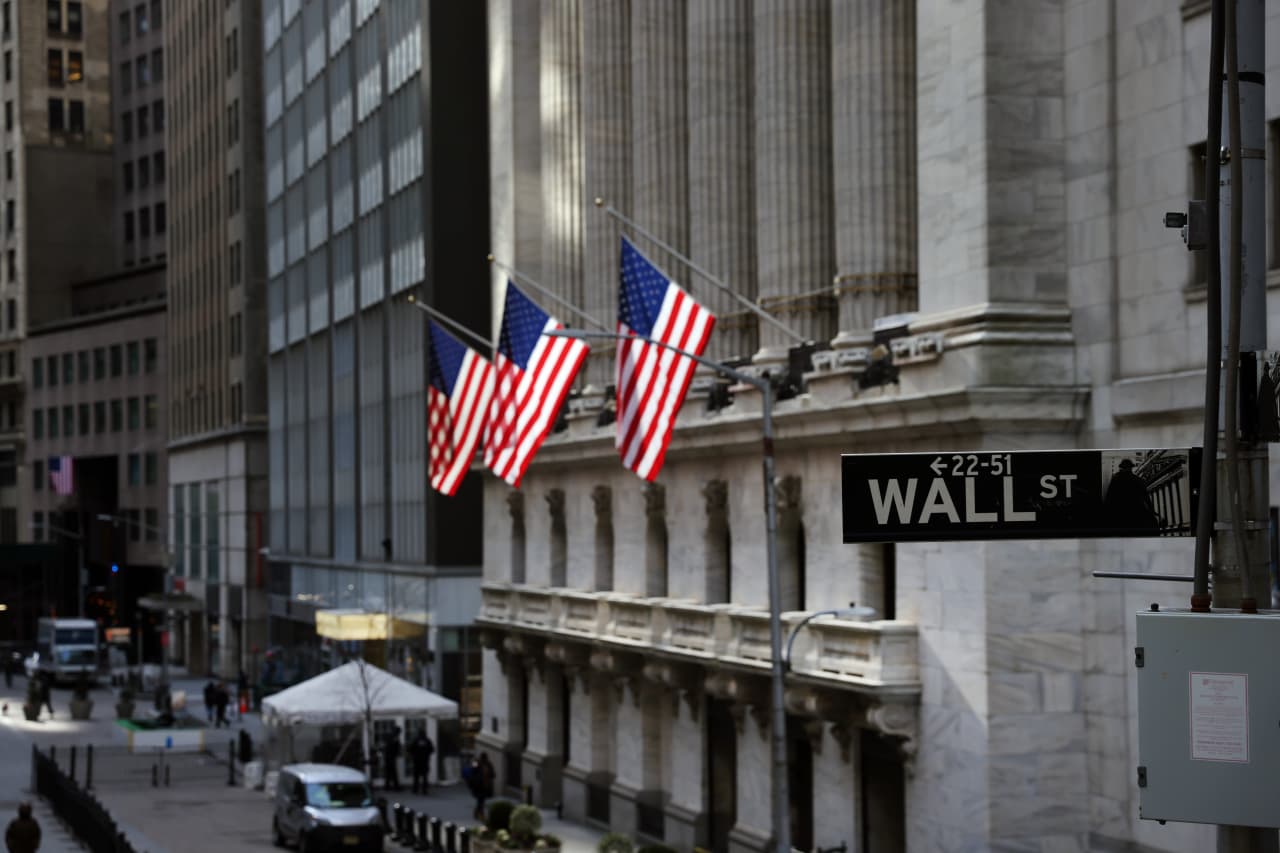
U.S. stocks were mostly higher on Thursday before trimming some earlier gains in midday trading as the S&P 500 headed for its first green session of 2024. Meanwhile, the technology-heavy Nasdaq Composite struggled to snap a four-day losing streak after kicking off the new year with a rough start.
How are stocks trading
-
The S&P 500
SPX
was rising by 4 points, or less than 0.1%, to 4708. -
The Dow Jones Industrial Average
DJIA
was advancing 122 points, or 0.3%, to 37554. -
The Nasdaq Composite
COMP
was off 21 points, or 0.1%, to 14572.
The S&P 500 fell for a third consecutive session on Wednesday as U.S. stocks continued to struggle at the start of 2024. The large-cap benchmark index fell nearly 1% during the Santa Claus Rally period spanning late December and early January, its worst such showing since early 2016.
What’s driving markets
After finishing off 2023 with a nine-week winning streak, U.S. stocks had been off to a rocky start in the new year. The S&P 500 and the Dow industrials were pushing higher on Wednesday, eating into some of their losses from earlier this week.
The Nasdaq Composite still fluttered between gains and losses in the midday trading, after briefly flipping positive in the morning session, but if it should close lower on Thursday, it would mark the first five-day losing streak for the index since Oct. 12, 2022, according to Dow Jones Market Data.
Heightened Middle East tensions, concerns that stocks and bonds have become overbought, and worries that the Federal Reserve may not reduce borrowing costs as quickly as hoped have all been blamed for driving the selloff.
But perhaps a more likely explanation, according to James St. Aubin, chief investment officer at Sierra Mutual Funds, is that investors waited to take profits until after the new year to delay their tax obligations.
“I don’t know that there’s a particular catalyst for it other than perhaps you’re entering a period of selling after the new year for tax purposes,” he told MarketWatch in an interview.
Minutes from the Fed’s December meeting released Wednesday showed officials welcomed the waning of inflation but expressed some uncertainty about the path of monetary policy in 2024.
But St. Aubin dismissed the notion that the minutes materially impacted investors’ expectations regarding the Fed. “I don’t think there was anything in there that changed the market’s mind,” he said.
Fed-funds futures traders Thursday saw a 93.3% chance of the Fed leaving its benchmark rate between 5.25% and 5.5% at its next meeting on Jan. 30-31, according to the CME FedWatch Tool. In addition, the chance of at least a 25-basis-point rate cut by March was at 60.4%, down from 90.3% a week ago.
See: Holiday hiring boom or bust? December jobs report to tell us.
There is no shortage of potentially market-moving news arriving in the coming weeks, including the start of earnings-reporting season for the final three months of 2023.
But more immediately in focus is the U.S. labor market, with the government’s nonfarm payrolls report due out Friday at 8 a.m. Eastern.
Investors have already received a batch of labor-market data this week. On Thursday, private payrolls data from ADP showed U.S. businesses added a solid 164,0,000 new jobs in December. Meanwhile, U.S. government data showed the number of Americans who applied for unemployment benefits in the final week of 2023 fell to a nearly three-month low of 202,000.
A report on job openings released earlier in the week showed the number of open positions had fallen to a 32-month low of 8.8 million as of November, the latest data available.
Companies in focus
-
Mobileye Global Inc.
MBLY,
-26.91%
slumped 24.5% after the creator of self-driving technology issued a revenue warning. Bank of America also downgraded the Israel-based company to an underperform rating. -
Walgreens Boots Alliance
WBA,
-6.51%
shares fell 7.7% after the drugstore chain reported first-quarter earnings that surpassed expectations, but cut its quarterly dividend by 48%. -
Apple Inc.
AAPL,
-0.71%
shares were down 1.1% after another Wall Street downgrade. Piper Sandler lowered its rating on the technology stock to neutral from overweight, citing concerns about valuation as well as pressures in the smartphone market.
Jamie Chisholm contributed


